

Contact person: Ms. Marry Shi
Position:
Address: Room 2115, No. 859 Lixi Road, Binhu District, Wuxi City, Jiangsu Province
Country: China
Phone: - Mobi: 13101972862
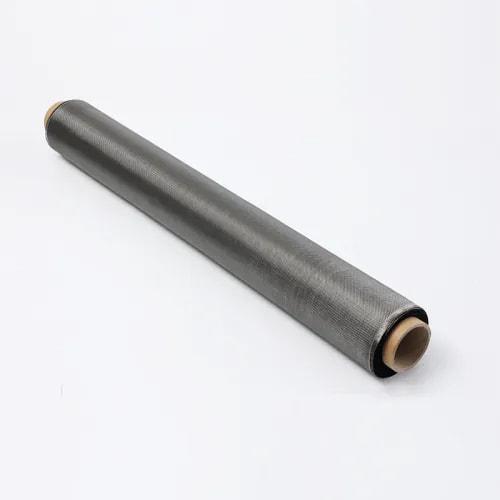
Bidirectional Carbon Fiber Fabric
Price:
Bidirectional Carbon Fiber Fabric
RG Carbon offers premium-grade Bidirectional Carbon Fiber Fabric, designed to deliver balanced strength and rigidity for a wide range of composite applications. Known for its uniform mechanical properties in both warp and weft directions, this fabric is a popular choice among engineers and designers looking for stability, performance, and versatility.
What is Bidirectional Carbon Fiber Fabric?
Bidirectional Carbon Fiber Fabric is a woven reinforcement in which carbon fibers are arranged equally in two directions (0° and 90°). This structure ensures balanced strength and stiffness across both axes, making it ideal for parts that experience multi-directional loads.
The fibers are interwoven into a flat structure using different weaving patterns, each offering unique characteristics suited to various engineering needs.
Types of Carbon Fiber Weaves
Plain Weave
The warp and weft yarns are interlaced in a 1:1 ratio. This creates a tight and stable fabric with minimal fraying, though it may lack the flexibility needed for contoured surfaces.
Twill Weave
Using a 2:2 or 4:4 interlacing pattern, twill weave provides enhanced flexibility and a distinctive diagonal appearance. It's suitable for wrapping around complex shapes.
➤ View Product: 12K Twill Woven Carbon Fiber Fabric
Satin Weave
Characterized by minimal interlacing points (e.g., 5:1 or 8:1), satin weave offers a smooth surface finish and high drapability—ideal for aesthetic parts or precision moldings.
Key Features and Benefits
Common Weaving Methods
Plain Weave: In this method, the warp and weft yarns are interwoven at a 1:1 ratio. While the carbon fiber plain weave offers good stability, it has limited flexibility.
Twill Weave: Here, the warp and weft yarns are interwoven in a 2:2 or 4:4 ratio. This creates better flexibility, making it suitable for complex curved surfaces in various applications.
Satin Weave: This method features fewer interlacing points of warp and weft yarns (such as 5:1 or 8:1), resulting in a smooth surface ideal for high-precision molding in carbon fiber fabrics.
Advantages: Balanced mechanical properties in all directions, facilitating easy layup design.
Disadvantages: The interlaminar shear strength is relatively low, making it prone to delamination.
Considerations
While bidirectional fabrics provide structural balance, their interlaminar shear strength is generally lower compared to unidirectional or multiaxial fabrics. Designers should account for potential delamination risks in high-stress applications.
Applications
Carbon Fiber Fabric is widely utilized across these applications due to its lightweight yet strong properties, enhancing performance and durability in demanding environments. Its versatility makes it an ideal choice for industries requiring high strength-to-weight ratios.
Aerospace panels and fairings
Automotive bodywork and tuning parts
Sporting equipment
Industrial composite structures
Marine components
RG Carbon offers premium-grade Bidirectional Carbon Fiber Fabric, designed to deliver balanced strength and rigidity for a wide range of composite applications. Known for its uniform mechanical properties in both warp and weft directions, this fabric is a popular choice among engineers and designers looking for stability, performance, and versatility.
What is Bidirectional Carbon Fiber Fabric?
Bidirectional Carbon Fiber Fabric is a woven reinforcement in which carbon fibers are arranged equally in two directions (0° and 90°). This structure ensures balanced strength and stiffness across both axes, making it ideal for parts that experience multi-directional loads.
The fibers are interwoven into a flat structure using different weaving patterns, each offering unique characteristics suited to various engineering needs.
Types of Carbon Fiber Weaves
Plain Weave
The warp and weft yarns are interlaced in a 1:1 ratio. This creates a tight and stable fabric with minimal fraying, though it may lack the flexibility needed for contoured surfaces.
Twill Weave
Using a 2:2 or 4:4 interlacing pattern, twill weave provides enhanced flexibility and a distinctive diagonal appearance. It's suitable for wrapping around complex shapes.
➤ View Product: 12K Twill Woven Carbon Fiber Fabric
Satin Weave
Characterized by minimal interlacing points (e.g., 5:1 or 8:1), satin weave offers a smooth surface finish and high drapability—ideal for aesthetic parts or precision moldings.
Key Features and Benefits
Common Weaving Methods
Plain Weave: In this method, the warp and weft yarns are interwoven at a 1:1 ratio. While the carbon fiber plain weave offers good stability, it has limited flexibility.
Twill Weave: Here, the warp and weft yarns are interwoven in a 2:2 or 4:4 ratio. This creates better flexibility, making it suitable for complex curved surfaces in various applications.
Satin Weave: This method features fewer interlacing points of warp and weft yarns (such as 5:1 or 8:1), resulting in a smooth surface ideal for high-precision molding in carbon fiber fabrics.
Advantages: Balanced mechanical properties in all directions, facilitating easy layup design.
Disadvantages: The interlaminar shear strength is relatively low, making it prone to delamination.
Considerations
While bidirectional fabrics provide structural balance, their interlaminar shear strength is generally lower compared to unidirectional or multiaxial fabrics. Designers should account for potential delamination risks in high-stress applications.
Applications
Carbon Fiber Fabric is widely utilized across these applications due to its lightweight yet strong properties, enhancing performance and durability in demanding environments. Its versatility makes it an ideal choice for industries requiring high strength-to-weight ratios.
Aerospace panels and fairings
Automotive bodywork and tuning parts
Sporting equipment
Industrial composite structures
Marine components
SEND INQUIRY
Please fill in fully your information to send email


CATEGORY
 Agriculture